Top 3 Recommended Policies

Trampoline parks involve active attractions where guests participate in jumping, climbing, and physical activities. Because these facilities serve a high number of visitors and rely on specialized equipment, proper protection is important for managing potential risks. Trampoline Park Insurance can help address certain exposures related to guest injuries, equipment, property, employees, and daily operations. Routeway Insurance Group helps trampoline park owners review their facility, safety procedures, and business activities to understand insurance options designed around their specific needs.
Understanding Family Entertainment Centers
Family entertainment centers bring together active attractions, games, parties, food service, and group activities in one location. Trampoline parks are a common example, often serving families, schools, birthday groups, and community events. Because guests are constantly moving through different activity areas, operators must manage safety, employees, equipment, and property risks every day. Trampoline Park Insurance can help address certain financial exposures connected with operating this type of facility. Depending on the business model, owners may also compare family entertainment center insurance, amusement center insurance, or other specialized commercial coverage. Routeway Insurance Group helps owners review how their location operates and understand available protection based on real business risks.
The Importance of Safety in FECs
Safety is a central part of operating a successful family entertainment center. Equipment inspections, employee training, clear guest instructions, cleaning procedures, and proper supervision can all help reduce preventable incidents. Even with strong safety procedures, accidents may still happen when guests participate in physical activities. That makes risk management and appropriate insurance for trampoline parks important parts of protecting the business. Routeway Insurance Group encourages owners to consider both prevention and financial protection. A well-organized safety program may create a better guest experience while also giving the business clearer procedures for handling injuries, equipment concerns, or unexpected operational problems.
Common Risks Faced by Family Entertainment Centers
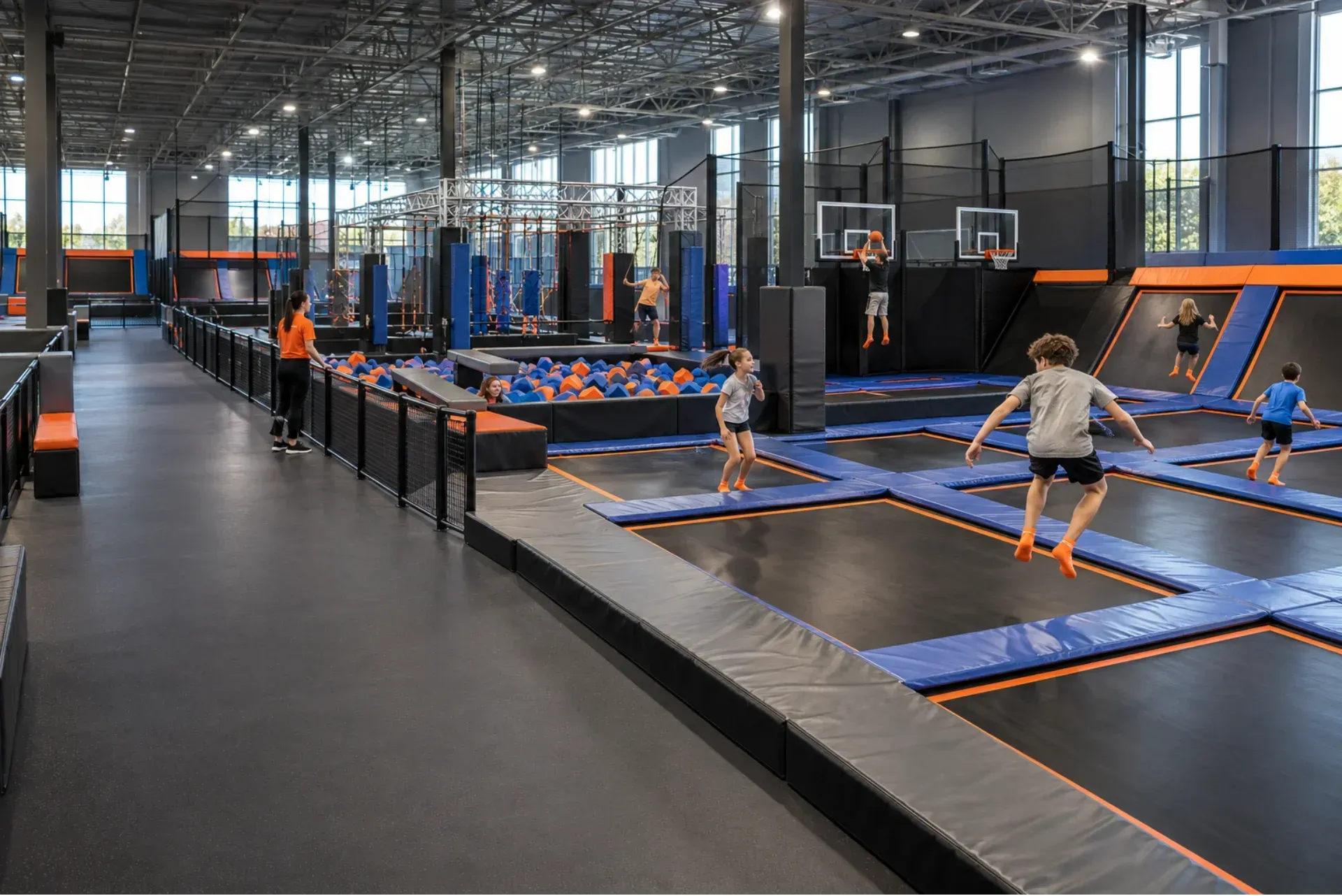
Family entertainment centers can face several types of risk because of the number of guests, employees, attractions, and equipment involved in daily operations. A guest could fall, collide with another participant, or claim that an unsafe condition caused an injury. Equipment can also become damaged or require unexpected repairs. Employees may experience workplace injuries while supervising activities, cleaning, moving equipment, or performing maintenance tasks. Property damage, theft, fire, severe weather, or other covered events may interrupt normal operations. Businesses that collect customer information or process electronic payments may also face digital risks. Family Entertainment Center Insurance and Trampoline Park Insurance should therefore be reviewed alongside the facility's actual activities, safety practices, building, equipment, staffing, and operational responsibilities.
Types of Insurance for Family Entertainment Centers
Different insurance options may address different areas of risk. Depending on the facility, owners may need Trampoline Park Insurance, amusement park insurance, property protection, employee-related coverage, cyber protection, or other forms of commercial insurance.
General Liability Insurance
General liability protection is an important consideration for businesses that regularly welcome members of the public onto their premises. In a trampoline park, guests participate in active experiences where falls, collisions, or other incidents may occur. A covered claim could involve bodily injury, property damage, or allegations that the business was responsible for an unsafe condition. General liability protection may help respond to certain claims, subject to policy terms and exclusions. When reviewing Insurance For Trampoline Parks, Routeway Insurance Group considers the type of activities offered, guest volume, facility layout, operating procedures, and other relevant factors that can affect liability exposure.
Property Insurance
Trampoline parks often depend on a significant amount of physical property to operate successfully. This may include the building, trampoline systems, padding, flooring, lighting, furniture, computers, point-of-sale equipment, signage, office equipment, and other business property. A covered event such as fire, storm damage, theft, or another loss could create substantial repair or replacement costs. Property protection may help reduce the financial impact of certain covered losses. As part of a Trampoline Park Insurance review, Routeway Insurance Group helps owners consider the property their business relies on and whether current coverage limits reflect the value of those assets.
Workers' Compensation Insurance
Employees play an important role in keeping trampoline parks safe and operational. Their responsibilities may include supervising activity zones, assisting guests, cleaning facilities, inspecting equipment, working at reception, moving supplies, or completing basic maintenance. These tasks can expose employees to workplace injuries. Workers' compensation coverage may provide benefits for eligible work-related injuries or illnesses according to applicable law and policy terms. Requirements can vary depending on the business and location. When discussing insurance for trampoline parks, Routeway Insurance Group considers staffing and employee responsibilities as part of the overall risk review. Understanding how employees work throughout the facility can help owners make more informed decisions about workplace protection.
Additional Insurance Considerations
Some trampoline parks have exposures that extend beyond basic liability and property concerns. Additional coverage may be worth reviewing depending on food service, events, technology, alcohol service, and operating structure.
Business Interruption Insurance
A serious covered property loss may prevent a trampoline park from operating normally for days, weeks, or longer. During a temporary closure, the business may lose revenue while still facing rent, payroll, utilities, and other continuing expenses. Business interruption protection may help with certain covered income losses and expenses when operations are disrupted by a qualifying event. Coverage terms and waiting periods can vary. When evaluating Trampoline Park Insurance, Routeway Insurance Group helps owners consider how a temporary shutdown could affect their finances and whether their current protection reflects the time and resources that may be required to reopen.
Liquor Liability Insurance
Some family entertainment centers serve alcoholic beverages as part of private events, adult nights, food service, or other activities. If alcohol is sold or served, additional liability exposure may exist. Liquor liability coverage may help respond to certain claims involving alcohol-related incidents, depending on policy terms and applicable laws. This coverage may not be necessary for facilities that do not serve alcohol. For trampoline park owners who do, it should be reviewed carefully alongside broader amusement center insurance needs. Routeway Insurance Group can help determine whether alcohol service creates an exposure that should be considered within the facility's insurance plan.
Event Insurance
Trampoline parks may host birthday parties, school visits, corporate gatherings, competitions, private rentals, or special promotional events. These activities can change guest volume, operating hours, staffing needs, and how different areas of the facility are used. Some events may introduce risks that are not fully reflected in routine operations. Event-related insurance can help address certain exposures associated with qualifying activities, depending on the policy. Routeway Insurance Group helps owners review how special events fit within their Trampoline Park Insurance and whether additional protection should be considered before hosting activities that differ from the facility's regular schedule.
Cyber Liability Insurance
Trampoline parks often rely on digital systems for reservations, waivers, customer records, payment processing, email communication, and employee information. A cyber incident can create problems if sensitive information is exposed, systems become unavailable, or unauthorized users gain access to data. Cyber liability protection may help with certain costs connected to eligible data breaches or digital incidents, depending on the policy. Cybersecurity practices remain important even when coverage is in place. When reviewing Family Entertainment Center Insurance, Routeway Insurance Group can help business owners consider whether their online booking platforms, digital payments, and customer information create technology-related risks that should be addressed.
Choosing the Right Insurance Provider
Choosing an insurance provider should involve more than comparing prices. Trampoline park owners should consider experience, communication, policy terms, available limits, exclusions, and how carefully their operations are reviewed. Routeway Insurance Group helps owners understand Trampoline Park Insurance options and how different forms of protection may apply to their specific facility.
Researching Potential Providers
Before choosing insurance, review how a provider approaches businesses with active guest participation and specialized equipment. Ask whether they take time to understand your attractions, facility size, staffing, safety procedures, events, and operating details. Compare more than the quoted premium. Pay attention to coverage limits, exclusions, deductibles, and available support. Owners comparing Amusement Park Insurance or insurance for trampoline parks should work with professionals who can explain why particular coverage options may be relevant rather than simply presenting a price without context.
Understanding Policy Terms and Conditions
Insurance policies include specific definitions, limits, deductibles, exclusions, conditions, and responsibilities that determine how coverage may respond to a claim. Business owners should review these details carefully rather than assuming every incident will be covered. Pay particular attention to activities offered at the facility, equipment requirements, guest participation, property values, and any exclusions affecting normal operations. Trampoline Park Insurance should be understood before a loss occurs. Routeway Insurance Group helps explain coverage in clear terms so owners can better understand what their policy is designed to address and where additional questions or adjustments may be necessary.
Consulting with an Insurance Agent
Speaking directly with an insurance professional can help trampoline park owners understand exposures that may be difficult to identify from an online quote alone. An agent can ask questions about attractions, employee duties, property, guest volume, events, safety procedures, and previous claims. This information creates a clearer picture of the facility's risk profile. When discussing Insurance For Trampoline Parks, provide accurate information about how the business operates and ask questions about anything unclear. Routeway Insurance Group focuses on practical guidance, helping owners compare available options and make informed decisions based on their operations and financial priorities.
Cost of Insurance for Family Entertainment Centers
The Trampoline Park Insurance Cost can vary significantly from one facility to another. Insurers may consider the business location, facility size, attractions, revenue, guest volume, payroll, claims history, selected limits, deductibles, and safety procedures. Because these factors differ, there is no single price that applies to every trampoline park. Routeway Insurance Group reviews the details of each operation when helping owners understand trampoline insurance cost and evaluate available coverage options.
Factors Influencing Insurance Costs
Several characteristics of a trampoline park can affect insurance pricing. Larger facilities or locations with high guest traffic may present different exposures than smaller operations. The number and type of attractions can also matter because some activities involve greater physical participation. Insurers may review employee payroll, annual revenue, property values, prior claims, safety procedures, training practices, requested coverage limits, and deductible choices. For business owners asking how much does trampoline insurance cost, accurate operating information is essential. Routeway Insurance Group helps owners review these factors so they can better understand what may be influencing pricing and where stronger risk-management practices may be beneficial.
Average Insurance Premiums
There is no single average premium that accurately represents every trampoline park. Pricing depends on the specific characteristics of the business and the coverage being purchased. Two facilities with similar attractions can still have different insurance costs because of location, building value, guest volume, payroll, claims history, safety procedures, or selected limits. For this reason, owners should be cautious about relying on generalized figures when researching trampoline insurance cost. A more useful approach is to request pricing based on accurate information about the actual facility, activities, staff, property, and coverage requirements.
Ways to Reduce Insurance Costs
Reducing insurance costs should not mean removing important protection simply to lower a premium. A stronger approach is to improve risk management while reviewing whether coverage is structured efficiently. Regular equipment inspections, documented employee training, clear guest rules, proper housekeeping, accurate maintenance records, and effective incident reporting can support safer operations. Owners can also review deductibles and limits to understand how different choices may affect their Trampoline Park Insurance Cost. Routeway Insurance Group can help identify potential gaps, review current protection, and discuss practical ways to balance insurance costs with the level of protection the facility requires.
Related Specialty Coverage
Facilities with different attraction types may need additional specialized protection. Businesses offering inflatable attractions can also review inflatable insurance to understand coverage considerations for bounce houses and related equipment. Facilities that include climbing challenges, ropes, or obstacle-based activities may also benefit from reviewing Obstacle Course Business Insurance as part of their broader risk-management strategy.
The Claims Process
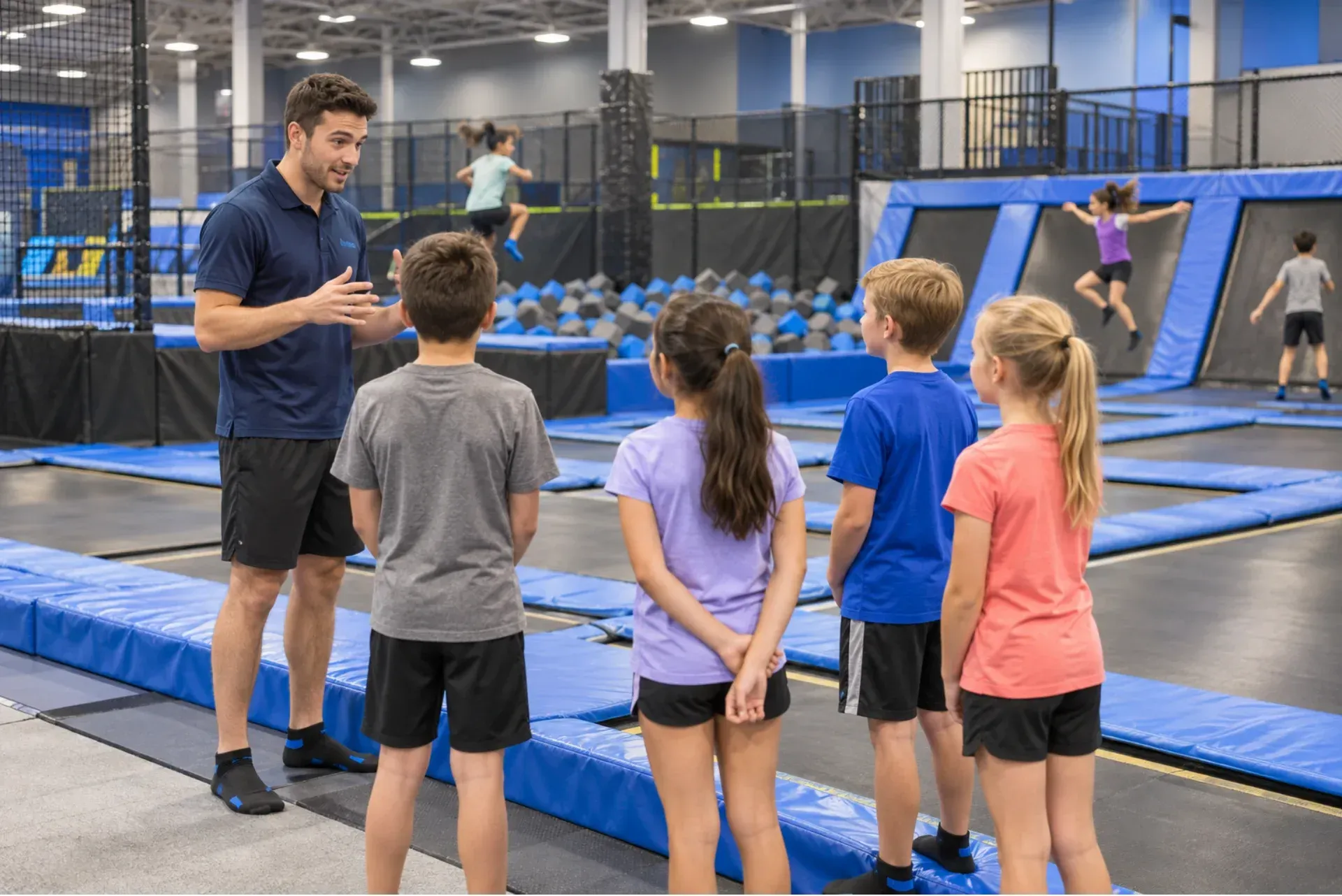
Understanding the claims process before an incident occurs can make an unexpected situation easier to manage. Owners should know who to contact, which records to preserve, what information should be documented, and what responsibilities may apply under their insurance policy.
Steps to File a Claim
After an incident, address immediate safety concerns first. Notify the appropriate insurance contact as soon as reasonably possible. Document relevant details, including photographs, reports, witness information, receipts, or other available records. Provide accurate information and keep copies of important communications throughout the claim.
Common Challenges in the Claims Process
Claims can become more difficult when documentation is incomplete, reporting is delayed, or business records do not clearly explain what happened. Questions may also arise about policy limits, exclusions, deductibles, conditions, or whether the incident meets the requirements for coverage.
Tips for a Successful Claim
Maintain accurate records before a loss occurs. Document incidents promptly, preserve relevant evidence, communicate clearly, and respond to reasonable information requests. Most importantly, understand your Trampoline Park Insurance policy before you need to use it.
Conclusion
Family Entertainment Centers play a vital role in providing fun and enjoyment for families and individuals. However, with this responsibility comes the need for comprehensive insurance coverage to protect against various risks. By understanding the types of insurance available, the importance of safety, and the claims process, FEC owners can make informed decisions that safeguard their business and ensure a positive experience for their guests.
Investing in the right insurance is not just about compliance; it's about creating a secure environment that encourages families to return again and again. With the right coverage in place, FEC owners can focus on what they do best—providing unforgettable entertainment experiences.
Contact Us